Obsession's Secret Weapon
and why I think the Hollywood machine gets in the way of anyone repeating that particular success

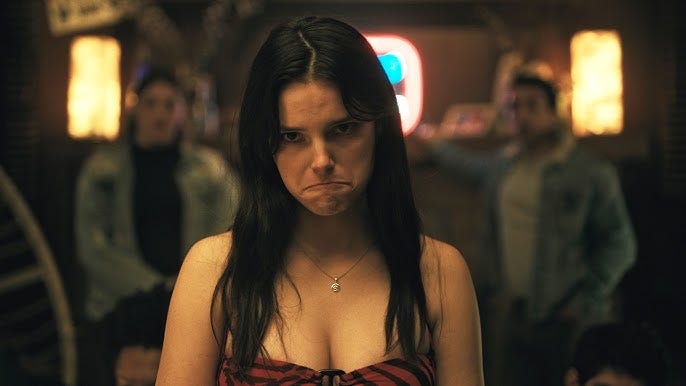
I saw Obsession twice in the theaters. First time was with my sixteen year old son, the second time with my eighteen year old son. Both of my dudes felt compelled to go partially because the movie had become such a must-see among their peer groups, a genuine cultural event. A lot of reasons for this, I think. Some of which I’m sure I’m too old and square to catch onto.
But I did catch onto one major reason for the film’s massive success, which I think is worth discussing from a screenwriting perspective.
It has to do with, well, morality. Spoilers below.
First of all, I loved the film. Both times I saw it. Really, really loved it. I thought the characters were terrific, the friend-group dynamics felt lived-in and real, their shared paranoia about in-group perception and the appearance of problematic behavior felt smartly accurate to the world that I see my teenage sons coming of age in.
I also laughed a ton, often uncomfortably so. Also, I was fairly scared in spots.
But what really set the film apart for me — aside from Inde Navarrette’s god tier performance — was the central dramatic engine.
Like many great films — from Casablanca to The Searchers to The Godfather to Do the Right Thing to The Insider — Obsession is really built around a single, thorny dramatic question:
Will our protagonist do the right thing in this difficult situation?
It’s a great question, but difficult to pull off. Especially in a horror movie. Usually, the central dramatic question with horror is pretty simple: “Will the hero or heroes survive?” You see endless variations on this. Will they survive the vampire? The ghost? The masked serial killer? The torture room? Or increasingly — will the protagonist survive the supernatural embodiment of his or her trauma?
But Obsession asks a very different and I think much more interesting central question.
Will Bear do the right thing?
Bear is the protagonist of Obsession. He’s a meek, highly self-conscious young man who is attracted to Nikki. He suspects he’s in love with her. When Nikki tells Bear that she’s going to quit her job to focus on her writing, he knows his chance to express his feelings might be slipping away. So one night after trivia at a local bar with their friends, Bear drives Nikki home. It’s his opportunity to take the risk and share how he feels.
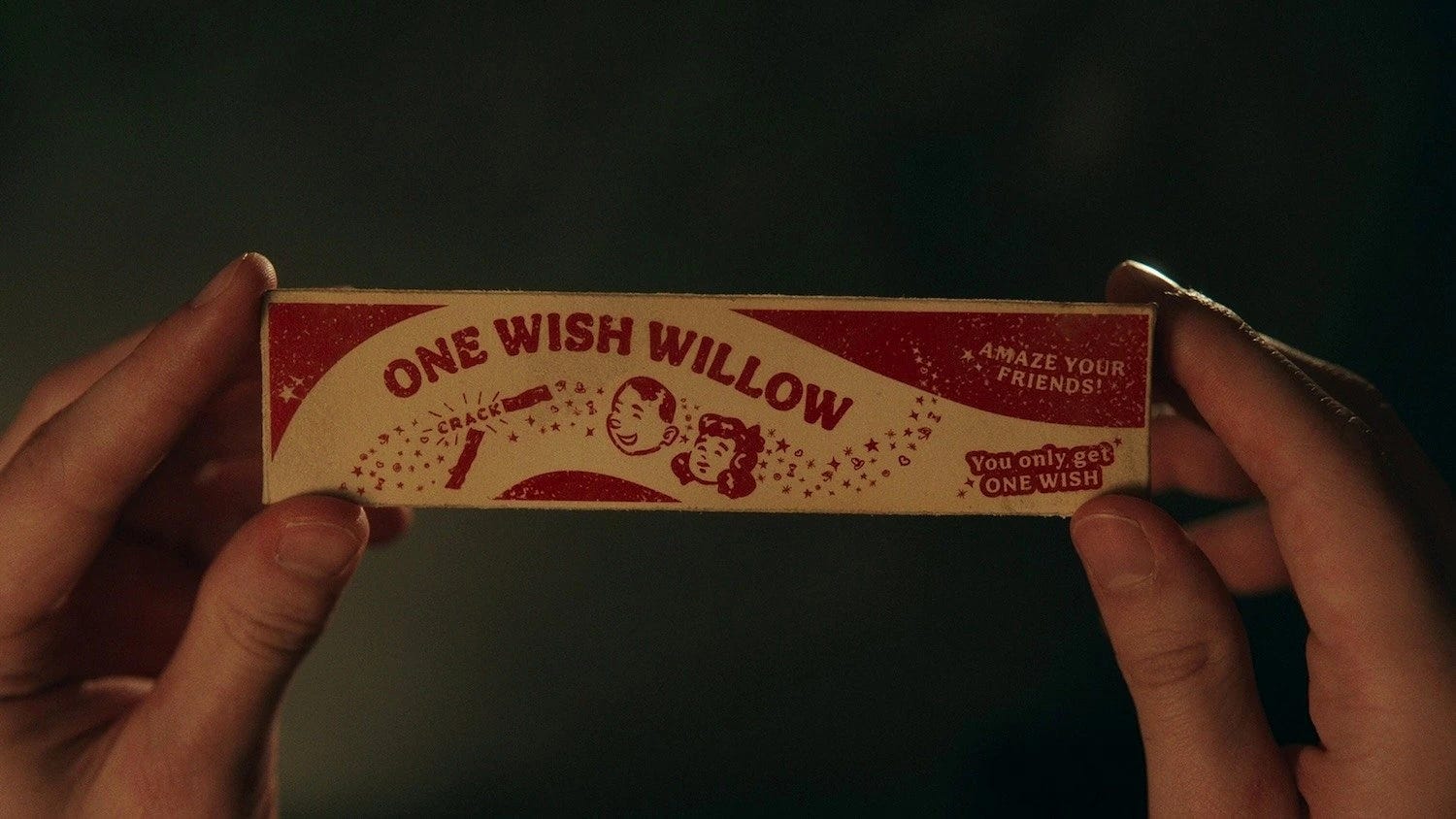
But Bear chickens out. So Nikki heads into her house. Still sitting in his car and frustrated with himself, he opens up a One Wish Willow — a retro novelty gift that he’d gotten for Nikki — and makes a wish: “I wish that Nikki Freeman loved me more than anyone else in the entire world.”
And miraculously, Nikki comes back out and asks Bear to take her home with him. And thus the nightmare begins.
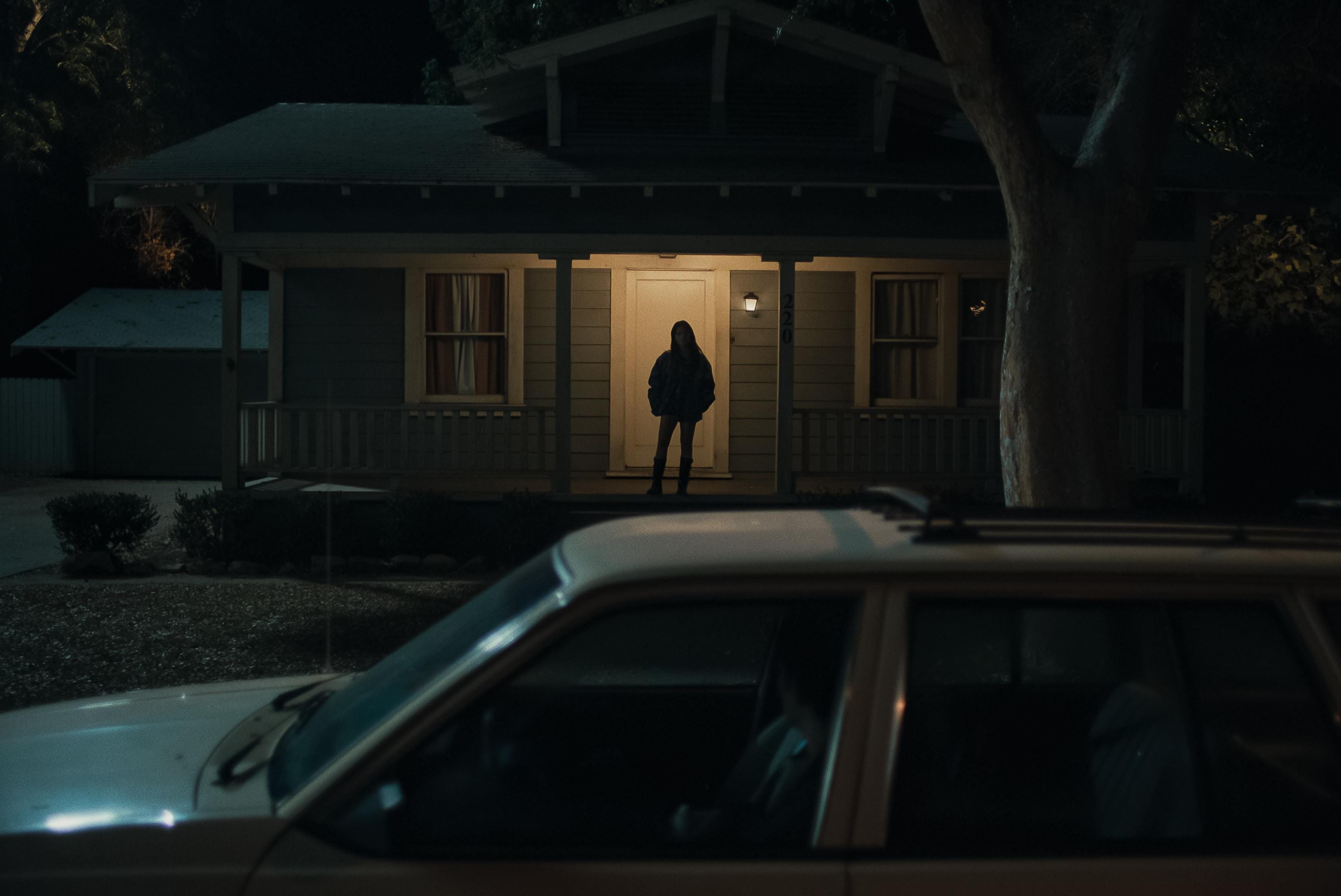
At first, Bear has understandable doubts. Is the toy causing Nikki to love him? Or is it just a coincidence and it’s really her? Quite quickly, Nikki’s desperate need for Bear spirals into deranged behavior.
But gradually, the horror is less about Nikki’s behavior in my opinion, and more about Bear refusing to take any action to restore Nikki’s agency back to her, even when things start going really fucking bonkers.
Every scene could have been asking — Will Bear survive this insane behavior? Which would’ve gotten redundant. That question is still present, of course, but it’s submerged under the really pressing question.
Instead, what each scene is really asking is — Will Bear ever own up to creating this situation and will he do anything about it?
Once Bear figures out that Nikki’s actions are indeed because of his wish, he tries to call One Wish Willow’s customer service — not to restore Nikki’s agency, but to adjust his wish so she doesn’t act so crazy.
He tries to find shortcuts and reasons to avoid doing the right thing. Which makes the horror — not only is his life in danger, but also Nikki’s (self-harm) and his friends (her insane possessive jealousy) — all the more acute. What could’ve been simple pulp scares is instead a thorny moral dilemma involving agency, responsibility, honor, and even consent.
Even better, Bear’s central flaw — his moral cowardice — feels quite applicable to the sort of “nice guy” type of dude that he seems to embody. All throughout the film, Bear tries to manage the consequences and peoples’ perceptions of Nikki’s behavior instead of taking ownership of how he caused that behavior. And it’s that moral cowardice that results in the death of himself and his two closest friends.
Because of this central moral charge, every scene in the film feels incredibly suspenseful and unique. And the death of one of Bear’s friends in particular feels unbearably tragic.
You watch each new batshit iteration of Nikki’s behavior and think — surely now Bear will do the right thing. But he never does.
In fact, Bear even starts feeling sorry for himself. When the real Nikki breaks through the demonic One Wish Willow version and asks Bear to kill her, he responds: “Is it so bad to be with me?” It’s probably the most vomit-inducing line of self-pity that I’ve ever heard in a film. Brilliant.
For me, it’s Bear’s evasion of his ever-intensifying moral dilemma that makes the movie so special. If you take away Bear’s responsibility for Nikki’s lack of autonomy and her subsequent psychotic behavior, you take away 95% of what makes Obsession entertaining and unique.
But taking away Bear’s responsibility for this situation would be the #1 note from probably 96% of studio executives. My own experience tells me that most executives and producers would — with the best of intentions — kill the very thing that made this movie such a smash hit and an immediate classic.
I’m not just speaking hypothetically from my own industry experiences on this front. In fact, Obsession’s writer-director Curry Barker got that exact let’s-flatten-out-the-moral-complexity-here note when he tried getting financing for his film:
"When we were shopping this around, there were companies that told me they would give me $2 million if I just rewrote the script to make Bear a hero. I was like, ‘I’m not rewriting the script to make Bear a guy that does all the right things. It’s so much more interesting that he doesn’t do the right thing and instead tries to make [the relationship] work and he just keeps making bad decision after bad decision.’ The movie would have been so boring if Bear was going on a journey to figure out the lore of the One Wish Willow. So I turned down more money to tell the story that I was more interested in telling.”
It’s easy now, after Obsession has become a 475 million dollar phenomenon, to scoff at the idea of turning Bear into a faultless hero and thus stripping away everything that’s interesting and unexpected about this movie. And good for Barker to have the conviction to tell the story he wanted to tell on a lesser budget. He deserves all his flowers.
But that story note, telling Barker to de-problematize Bear’s morality, is the most normal Hollywood note in the world. I think it’s because most of Hollywood, at least on the executive level, thinks that audiences want to cheer for the hero and root against the villain.
And in most cases, they’re exactly right. When I’m watching a Mission Impossible or John Wick movie, I want to see Cruise and Keanu taking on some nasty fuckers and kicking their asses. Cruise and Keanu can be psychologically-complex and tortured, but I don’t want to see them killing innocents or betraying friendships or oaths. I want some real moral dividing lines.
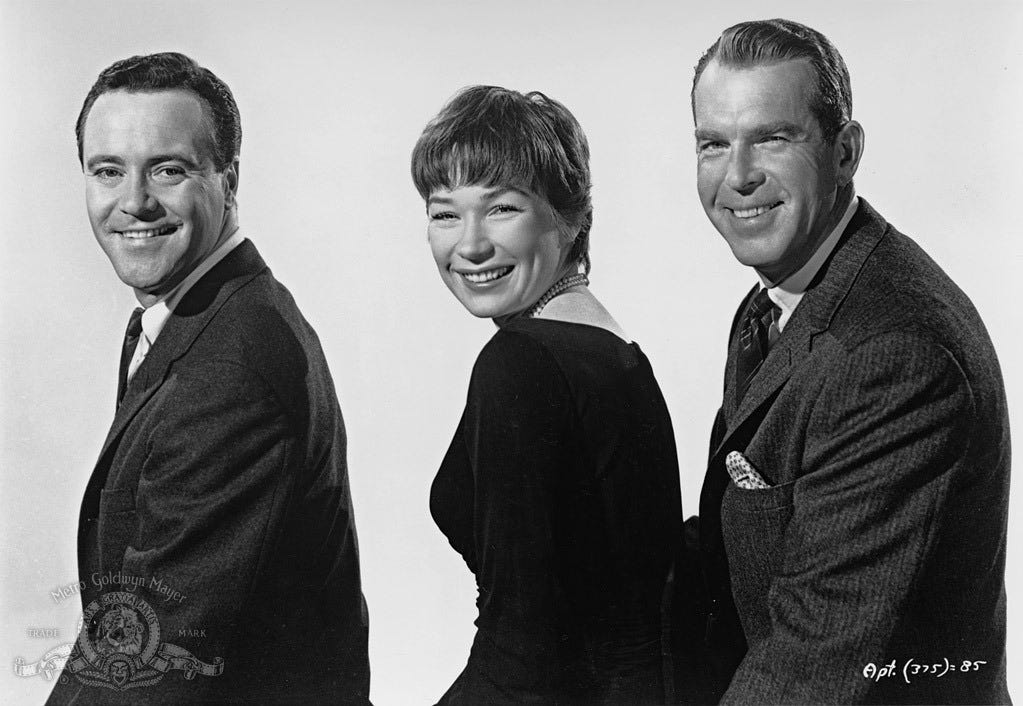
I don’t watch that many romantic comedies, but when I do watch something like Sleepless in Seattle (sure, I’m old) or The Apartment (but I have good taste), I don’t necessarily want to see two morally-bankrupt shitheels finding true love. I’m not rooting for Fred MacMurray’s duplicitous asshole in The Apartment, I’m rooting for Jack Lemmon and Shirley MacLaine’s complicated but endearing screwups.
So, likewise, I want a pretty clean morality here as well.
So why doesn’t that apply to Obsession?
John Wick and Mission Impossible are built around movie stars doing badass setpieces. The story of each entry only really matters to the degree that it makes us care about what happens in those set-pieces. That’s why you watch them.
Likewise, a good romantic comedy — or a perfect one like The Apartment — is about watching charming characters overcome relatable obstacles to affirm the possibility of true love in a screwy world.
These types of films aren’t built around moral questions. You know going in that Cruise and Wick will do the right thing. It’s built into their personas and the franchises. If you sit down to watch a rom com, you know Glen Powell or Meg Ryan aren’t going to cross any hard moral lines on their way to true love. A certain moral safety net is built into the genre.
But Obsession is doing something else. It’s presenting a fresh, pressing moral quandary within a genre story. And it’s a whole lot harder to sell and market a moral quandary than a solid-but-expected genre piece.
Those first financing companies wanted Barker to shift the central question away from the thorny, uncomfortable question of “will Bear do the right thing?” and towards the morally-safe question of “will Bear survive?” instead.
It was either because they misunderstood the kind of story he was telling, or — most likely — they doubted their ability to market and sell a moral quandary type of story. It’s tough to get presales on a moral interrogation, even in the horror genre. There’s a reason why Barker had to make his film for under a million.
So, let’s say you’re writing a heist movie script. Your protagonist is a bank robber.
If you get producers or executives involved, at some point you’ll likely get the following note: “Hey, let’s have our lead’s father have an expensive medical bill to pay, or let’s give his brother a big gambling debt. That way we understand and sympathize with our hero’s actions.”
Is that a decent note? Depends on the story you’re telling.
If the point of the story — the reason to watch the movie — is say the action setpieces, or some big key plot twist, then maybe it’s an okay note. I mean, you’ll probably want to come up with something less obvious.
In Baby Driver, the protagonist has a deaf foster father to help goose up our sympathies. That’s because Edgar Wright wasn’t doing an adult interrogation of the criminal heart and mind like Michael Mann, he was just trying to get you to give enough of a shit about Ansel Elgort so you’d care about his cool music video car chases.
Anyway, very often the note-behind-the-note is this: we want to root more easily for our protagonist. We don’t want to question why he or she is doing what he or she is doing. We want to put that question to the side.
But if you’re telling a character study about a person who deals with their emotional or spiritual issues by conducting heists, then it’s a quite bad note. Because it’s stripping away the central reason to tell the story.
So, you have to know what kind of story you’re telling.
If it’s a story where act one is mostly about getting the audience to root for your protagonist while setting up the situation of the story — because the real juice of your script is in its, say, the car chases or some plot twist — then you should probably do whatever it takes to make your protagonist sympathetic enough to accomplish that. Give them five foster kids with cancer. Whatever.
But if you’re telling a story where you’re examining some essential element of human psychology, then making the protagonist’s motivations too simple and uncomplicated is probably going to fuck things up.
(Also, if you’re doing the moral quandary story, you should probably also accept that it’s gonna be really hard to get financing, or to tell the story on too big of a scale.)
Even the trailer for Obsession doesn’t lean into Bear’s moral responsibilities regarding Nikki’s behavior.
Based on the trailer, Nikki seems more like a new variation on the crazy-bitch-from-hell type of character that used to pop up in prior decades of horror films. For an old guy like me, you can see shades of Fatal Attraction or Single White Female or The Hand That Rocks the Cradle here.
Moral quandaries are hard to market. Of course, it wasn’t the marketing campaign that made Obsession a smash. It was the word of mouth. Because how do you market a moral quandary?
You wouldn’t sell a new line of Crest by leaning into an ethical gray zone. “Crest toothpaste — yes, it’ll make your teeth whiter, but at what moral cost?”
And yet, I do miss moral quandary type movies. I think the industry is still trying to figure out the right scale and delivery mechanism for these types of adult stories.
For awhile, prestige TV was the place for such interrogations of the human heart and mind and soul. Create a crime universe like The Sopranos or The Wire, or a genre universe like Deadwood or The Americans, and then you could pose tough moral questions inside it — will our protagonist do the right thing and/or will they change? — while delivering the occasional action set-piece or show-stopping monologue.
But for awhile now, I think the industry has forgotten that this kind of dramatic moral interrogation was a big, big part of the prestige TV boom. The working assumption in a lot of Hollywood right now is that prestige TV is mostly about big stars and name directors and accomplished cinematography and long oners.
The lighting can and probably should be a little murky, but the moral universe must be crystal clear. Either we’re rooting for people with clear and sympathetic motivations, or we’re watching bad people behave badly. Cheering for white hats. Or living vicariously through black hats.
But a different moral lane, where it’s not immediately clear what the right thing to do might be, has been exiled to real life, it seems.
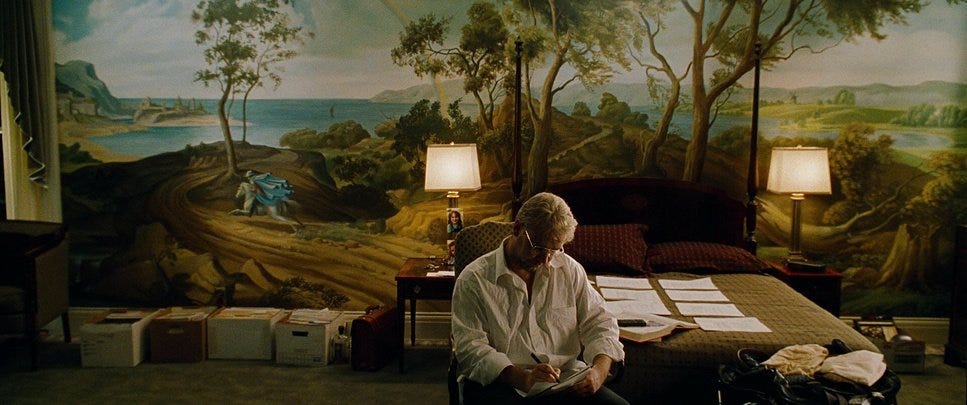
I hope the industry figures it out soon. Because I miss these types of stories. Michael Clayton and/or The Verdict. Those types. I don’t know if there’s any movie I’m more infatuated with right now than Michael Mann’s The Insider. The themes, the characters, the filmmaking style, the tone. It’s kind of my personal cinematic ideal at the moment.
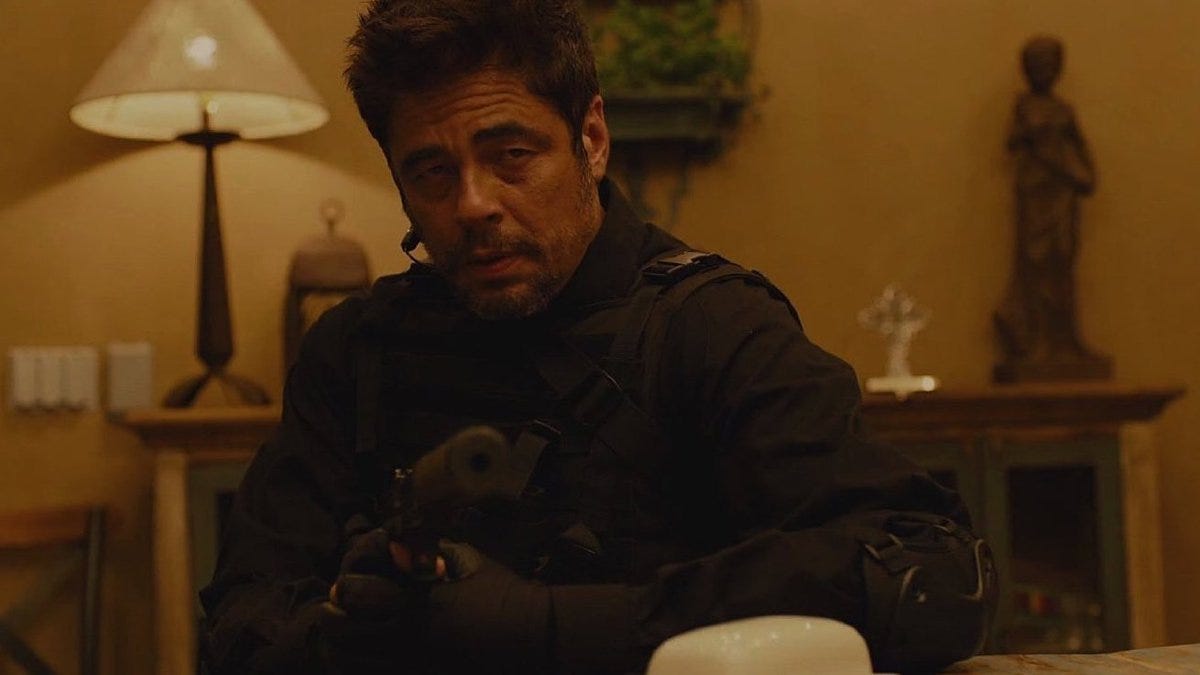
Perhaps only matched by another muscular morally-complex film, Denis Villenueve’s Sicario. In some ways, both of these films pose a similar central question:
In this complex and murky moral situation, what is the right thing to do?
The industry’s default right now is to actively not ask that question. Rather, the current default is to make it as obvious as possible that our protagonist is doing the right thing. Ideally, as early as possible.
Or, if they are doing the wrong thing, the preference is to make it abundantly clear that they have no real choice in the matter.
We are actively avoiding stories that center questions of morality and conscience either by avoiding that question, or loading up one side of the moral equation so much that the answer is glaringly obvious.
I think in addition to everything else Obsession does well, it also taps into this lack of real moral inquiry in our recent storytelling. It does a lot of other things well. But I think this pressing moral and ethical element is a huge part of the crazy word of mouth that pulled me and my sons into the theater.
So practically speaking as a screenwriter, what’s my point?
Well, point one: there might be a lane open here if you can figure out a story centered on a fresh moral quandary, where the entire drive of the entire story is about whether or not the protagonist will do the right thing in a morally-complex situation.
And, point two: if you do want to write a script built around such a moral quandary, you probably should write it on spec. You shouldn’t develop it. You shouldn’t pitch it. Because just about anyone with monetary skin in the game will immediately push you to smooth that sticky morality into something easier to swallow.
That is, the industry will push you to “improve” your morally-charged story until it resembles every other easy-to-swallow story that feels morally and aesthetically interchangeable with a toothpaste commercial. They’ll want you to make your Bear into an uncomplicated and very sympathetic hero. And later, they’ll wonder why your project wasn’t a success when a little sub-million dollar budget movie like Obsession did so well.
Great shit, Tony. Interesting tweak that you saw him as buying the OWW for Nikki when I thought it was a great, ironic early character-revealing moment that he went in to buy a gift for Nikki and ultimately bought something for himself.
I wonder if the onslaught of social media has created the idea that whatever you make, you are advocating for--which in turn has created saintly perfect heroes and awful, small-minded villains. I have two little kids and EVERY children’s story has a deeper moral component than anything in mainstream movies lately.