Hitting the Wall
it's gonna happen some time

Screenwriting is a strange endeavor.
I don’t even know if I’d call it a career. For me it’s some combo of a calling and a grift. A calling in that I can’t help but to write this shit. A grift in that I have no expectation of a steady income in doing so, so I’m constantly hustling to pocket as much money as I can before they kick me out of the club.
You expel a lot of energy and time trying to break into the game. Then you expel even more energy and time just trying to stay in it. You pick up tricks of the trade, figure out ways to bounce back from having your heart stomped on over and over again. And pretty soon, if you’re lucky, you’ll advance far enough up the ladder so you can finally find yourself solemnly mouthing words like “aspirational” while pitching yourself as the perfect person to adapt an obscure board game into a movie. And then, when you catch a glimpse of yourself on a zoom conference saying this shit with a dumb pleasant obsequious look on your face, you get to suddenly wonder what it is you’re doing with your life.
Anyway, at some point in 2025, I hit a wall.
It was an accumulation. Early in the year, I was still reeling from the most challenging industry job I’ve had in my fifteen year career. Of course, every industry job is challenging. That’s the nature of the beast. After every production, I always enter some kind of prolonged funk. I think it’s my body forcing me to slow down a bit so it can recover.
But after wrapping up on this particular bad boy, I felt psychological and physical shockwaves to such a degree that I went into therapy for the first time. I even had to do physical therapy for stress-related physical ailments that I’m still trying to recuperate from a year or so later. So I had that going for me.
The release of my first film Americana around mid-year was also an interesting experience. Otherwise, the rest of 2025 was fairly typical for someone at my level in the industry (I work steadily but I’m not a name). The financing fell through on my second picture as a writer-director while we were in the middle of casting it, slow moving deals, lots of development, etc.
Little by little, things sort of piled up on me. Also, I turned fifty.
The point really isn’t what drove me to hit a creative wall. The point is that I hit one, as I think most creative people do at some point. I’ve never been someone who suffered from writer’s block, but this last year I did hit something. Writer’s ennui? Writer’s who-gives-a-fuck? Writer’s existential midlife crisis?
Whatever this wall was called, I had to find a way over it.
I think one problem is that I was developing too many projects.
No one in that process was doing anything wrong, per se. All good people that I’ve enjoyed working with. Even still, somewhere along the way I gradually realized that I no longer felt like a writer. I felt like a cross between a salesman and a middle manager.
I wasn’t writing out of passion or creative excitement. I was writing in an attempt to pre-engineer outcomes and to balm anxieties. Which is — I think — a sort of living death as an artist.
I’m grateful to have an active career in the entertainment industry. I’m sure plenty of folks who are trying to do the same are reading this post and muttering “keep whining, you spoiled brat.” But my point isn’t that I’ve had things tough. I actually think I’ve been extraordinarily lucky in my career. I’ve worked with hundreds if not thousands of people on this weird journey and there are only two with whom I would never work with again. Pretty solid ratio.
These professional difficulties and disappointments and stressors I’m outlining are just the price of admission. I’m lucky that I get to deal with them. But I still have to deal with them.
Spending more time with my family and going back to Arkansas for a few months this summer helped. So did talking for awhile with a therapist and getting more physically-active. Little by little, I’ve come back to myself as a person.
Oh, and we got a second puppy. That also helped.
But even if I have been finding my way back to myself as a human, I still had to find my way back to myself as a writer.
My somewhat complicated 2025 only brought to the surface some unhappy creative shit I was already feeling. Which is probably part of the reason I haven’t been offering up any practical screenwriting advice lately. A sort of doctor-heal-thyself sort of thing has been going on.
For a bit now, I’ve been feeling like I’ve been playing the game just to stay in the game. Too much time trying to be clever and smart about the industry. Too much good teamwork and professional people-pleasing and sound strategy-making and not enough dumb blind selfish artistic passion.
Screenwriting is a tricky line of work. Every job is a new reinvention of the gig, I think. At least for me. Sometimes I’m pursuing my own personal vision — like on Americana or Damnation. Which means I have to be the stubborn guardian of my own instincts, even when others disagree with them. Relatively speaking, that’s fairly easy. You just trust your gut, communicate with others, and try to get people to buy into it.
What’s trickier is when you’re getting paid good money to empty yourself out to someone else’s vision. On Poker Face, I loved getting to work with Rian Johnson. There’s a reason why he’s his own subgenre. He’s the real deal creatively and a genuine sweetheart of a guy.
But as the showrunner of someone else’s show, I also had to learn how to quiet my own instincts and defer to his. And then — most importantly — I had to get myself to genuinely, sincerely buy into his instincts and protect them when others disagreed. Even when I disagreed. Thankfully there was more overlap between our instincts than not. But even when my instincts were different, I tried my best to defer to and protect Rian’s. Because that was the job.
It’s part of the profession that doesn’t get talked about much, where as a writer you sign up to have someone else’s voice in your head. And while you’re getting well-compensated to have that voice in your head, you trick yourself into believing that you actually prefer it that way. (At least I do — that’s how I manage the alien weirdness of it.)
And then when the gig is over, you’re supposed to go back to trusting only your instincts and listening only to your voice again. Tricky.
In essence, on Poker Face my job wasn’t to have a vision for the show. My job was to internalize Rian’s vision, then lead the other writers so we could narrow down our ideas enough to pitch them out for Rian’s approval, his veto, or (most often) his alteration. And then once we went to script, my job was to help our writers get their scripts as close as possible to Rian’s voice so he could do the final pass with as little work as possible.
It’s not a bad gig. But it’s different than writing. It’s not exactly being the stand-in for a lead actor while the gaffer and DP figure out the lighting and camera issues, but maybe it’s a little analogous. You’re a key part of the process, but you’re not exactly doing the thing itself. But as a wise man once said, that’s what the money’s for.
After Poker Face wrapped, I had to shake myself out of guessing at what other people wanted on the page and get back to putting down what I wanted to see on the page.
But I also soon realized that I had to figure out what it was I actually wanted to see on the page.
Americana and Damnation are the projects that are the closest to my heart, and both of them are essentially me taking a genre I love (the Western) and fusing its archetypes and tropes with some of my real world interests.
I love both of those projects. I think they’re genuinely good and uniquely mine.
They both have their own modality. Redneck post-modernism, maybe. Or trailer park pastiche. Whatever it is, I think I’ve now exhausted that particular storytelling well.
I’m less enamored with manipulating surfaces and semiotics and codes than I used to be. I find myself searching for something more tangible, less knowing. Right now, I’m wanting to tell stories driven more by my inner needs and convictions than by my weirdo erudition.
In essence, I realized this year that I was tired of my shit. So I’ve also spent much of the last year trying to reinvent myself to myself as a writer.
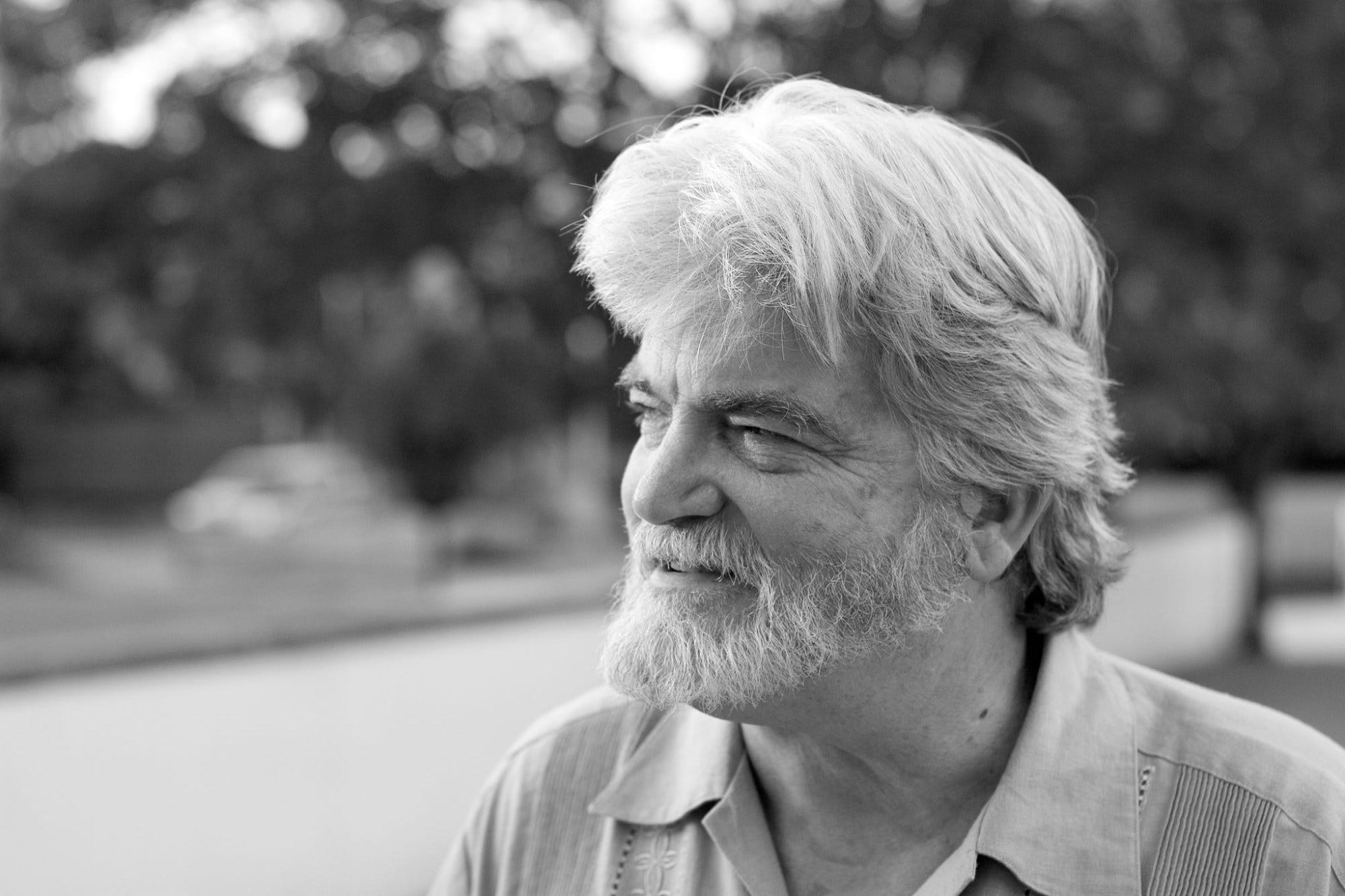
My most important creative writing professor during my MFA years in Arkansas, Skip Hays — a wonderful novelist, by the way — passed away just before last Thanksgiving. I wrote about Skip and his work for the Arkansas Times recently. Between reading and re-reading Skip’s work and hanging out with fellow Arkansas-based writers and reading their work, in the last few months I’ve fallen back in love with fiction for the first time since before I started pursuing screenwriting 15 or so years ago.
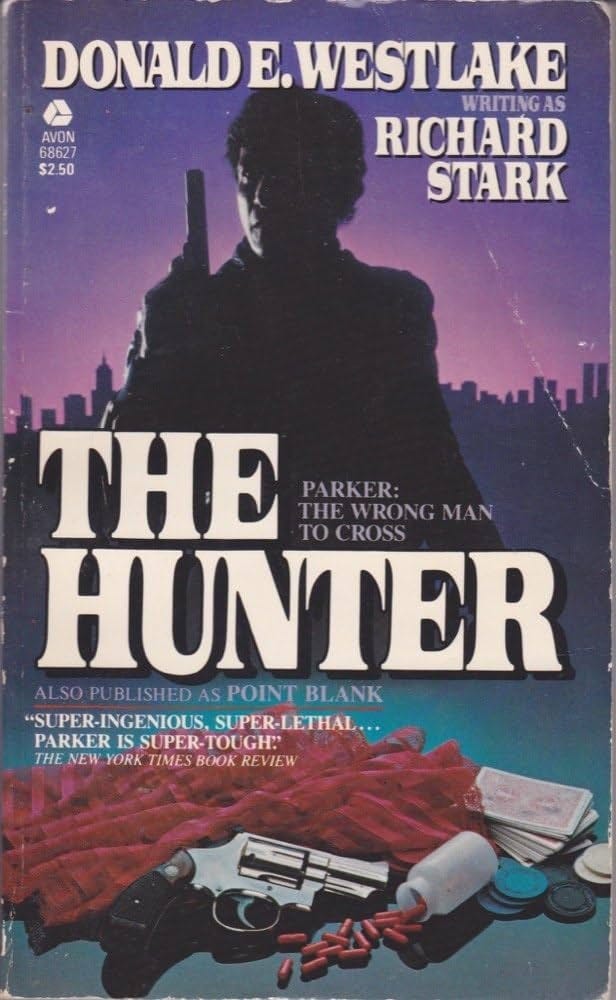
I’ve mostly been reading my favorite genre: tough guy crime novels. Two or three a week. Richard Stark’s Parker novels. John D. MacDonald’s Travis McGee novels. Books by Charles Willeford, James Crumley, Denis Johnson, Harry Crews, Edward Bunker. I’m having a blast.
I think a great crime novel should be fairly propulsive, but it should also animate the inner lives of the characters and the shared world these fuck-ups inhabit. I’ve found these crime novels to be exactly the right counterbalance to the anxious Hollywood industry groupthink I’ve been spending too much time trying to ingratiate myself into lately.
In a strange way, getting a little obsessive about unfashionable fiction is just what my screenwriting has been craving. Each one has been a little foothold for getting over that wall.
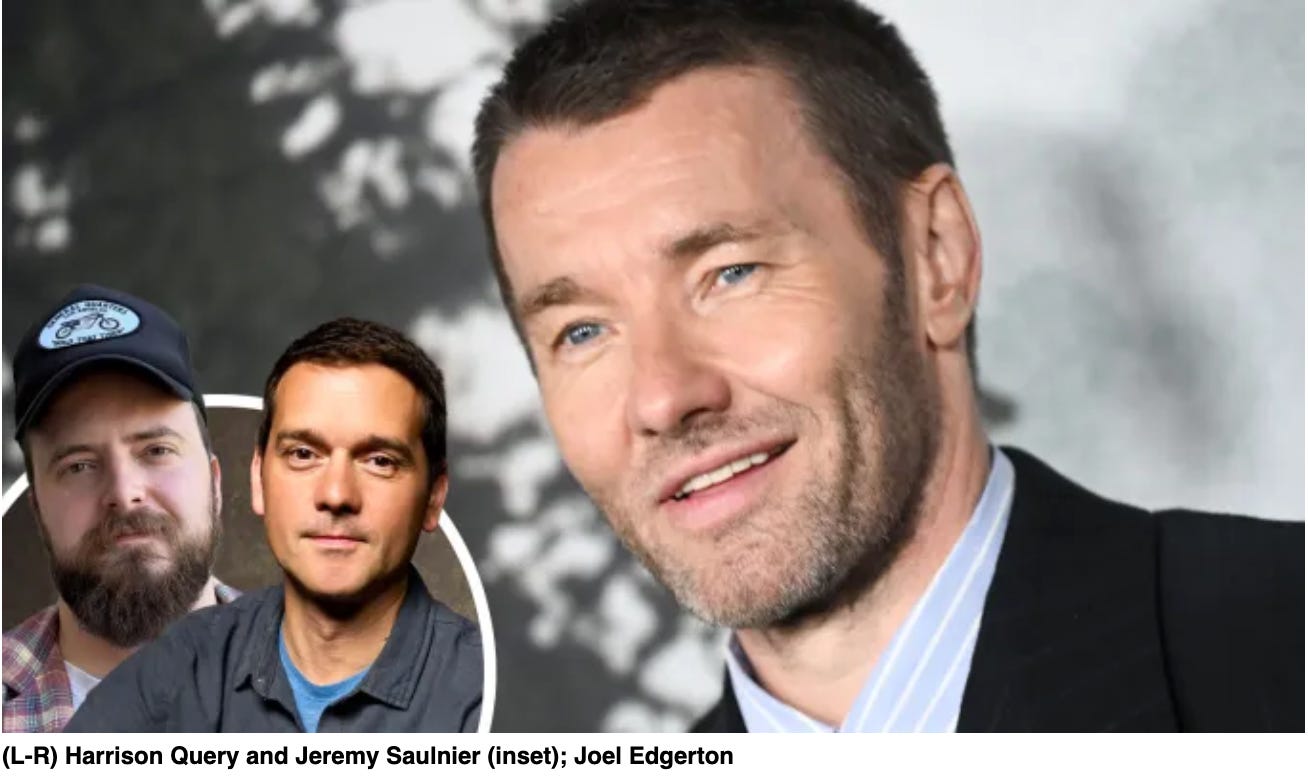
In a couple of weeks, I start a new TV gig. I’ll be co-showrunning Trigger Point, a forthcoming Netflix/A24 series starring Joel Edgerton, with Jeremy Saulnier (Blue Ruin, Rebel Ridge, Green Room) directing. Harrison Query created the show and will be co-showrunning with me.
I’m looking forward to this greatly. The first two episodes Harrison has written are outstanding and soulful and tangibly real, based on men he knows deeply. It’s just the kind of storytelling I’ve been craving to do myself. Harrison has a very clear vision of the show and I’m excited to be at his side as we find the best way of achieving that vision.
As I mentioned, I’m also in the middle of reinventing myself to myself as a writer. So, an existential question hangs over what is feeling like a really great — and already quite different — gig.
By taking this job, am I just delaying having to deal with my own creative shit? In this case, I don’t think so.
Whenever I start a job where I’m not the auteur voice behind the project (most of my jobs, by the way), I always start a brand new spec project on the side. That is, when I sign on to help someone else achieve their vision, I also immediately start writing something separate that’s totally my vision, done according to my own terms.
That way, whenever creative frustration inevitably arises on my paying gig, I can just turn to this fresh new project and take total ownership there. Then I can return to the shared project with a better mindset without feeling like I’ve been selling out my own creative impulses.
It’s a trick I first learned while writing on Longmire for five seasons. If nothing else, it’s a release valve for my creativity and my sizable ego.
So, as I’m starting Trigger Point, I’m once again jumping into writing a new project on my own. But this time, instead of working on a new script, I’m starting a novel.
The genesis is this: I’ve had this feature idea I’d been pecking away at off and on during the last year, a muscular revenge story. It’s set in a similar post-military milieu as Trigger Point, actually.
I’d been planning to dash it off as a short story, then package it and get paid to write the script. The short story as a sales tool. Typical savvy screenwriter bullshit.
So I started dashing it off a week or two ago. But almost immediately, I could feel myself coming alive as a writer in a way that I haven’t for maybe years. I started getting into the interior lives of the lead characters. I also started writing about the modern world and some unfashionable ideas about masculinity and violence and honor.
Very quickly, I realized that this story was turning into an incredibly shitty sales tool. But it was also writing that I could stand behind. It was shit I need to write and that I believed in, regardless of its perceived commercial prospects. Somehow I’d stumbled into doing what I was actually craving to do.
Perhaps somewhere down the line there’s a world where I eventually package myself as a writer-director for the adaptation of this novel. But maybe not. Maybe I’ll just try to get it published. Or maybe I won’t. Hell, I might not even finish it.
Right now, I don’t care about the outcome. I just want the thrill of telling a great story while getting at some things I feel very deeply about being a man in the modern world.
I doubt that going off to write a novel is anything approaching practical screenwriting advice. But right now, the last thing I want to do is be practical. I’ve been doing that for years. It’s given me a respectable and steady and at times very rewarding career, but it’s also driven me into an existential brick wall.
The thing is, I was always going to hit that existential brick wall anyway, one way or another. It was pre-built into my temperament. Probably pre-built into the human condition itself.
The blessed thing is, as a creative person, I now get to try to write my way over that wall. Or maybe even through it.
Very sensible post-hoc rationalisation. I’ve worked with writers for 50 years. Few have such clear self-awareness. Important thoughts. Thank you.
Even A list showrunners say the same things